I use science to be a Vet
Name: Fran Alsworth
Job Title: Small Animal Vet
Name: Fran Alsworth
Job Title: Small Animal Vet
Fran is a veterinary surgeon specialising in small animals such as dogs, cats, ferrets and tortoises and also has a big interest in primates! Fran’s day job alternates between offering consultations, giving vaccinations and conducting surgeries (she once had to operate on a dog that ate a tennis ball!). After originally getting rejected by 4 four universities, she went to Bristol University to do her 5-year veterinary degree.
Fran is a veterinary surgeon specialising in small animals such as dogs, cats, ferrets and tortoises and also has a big interest in primates! Fran’s day job alternates between offering consultations, giving vaccinations and conducting surgeries (she once had to operate on a dog that ate a tennis ball!). After originally getting rejected by 4 four universities, she went to Bristol University to do her 5-year veterinary degree.


I would call myself a scientist now, because we use a lot of maths and everything that I have learnt has come from a basis of science. "
What does a normal day look like for you?
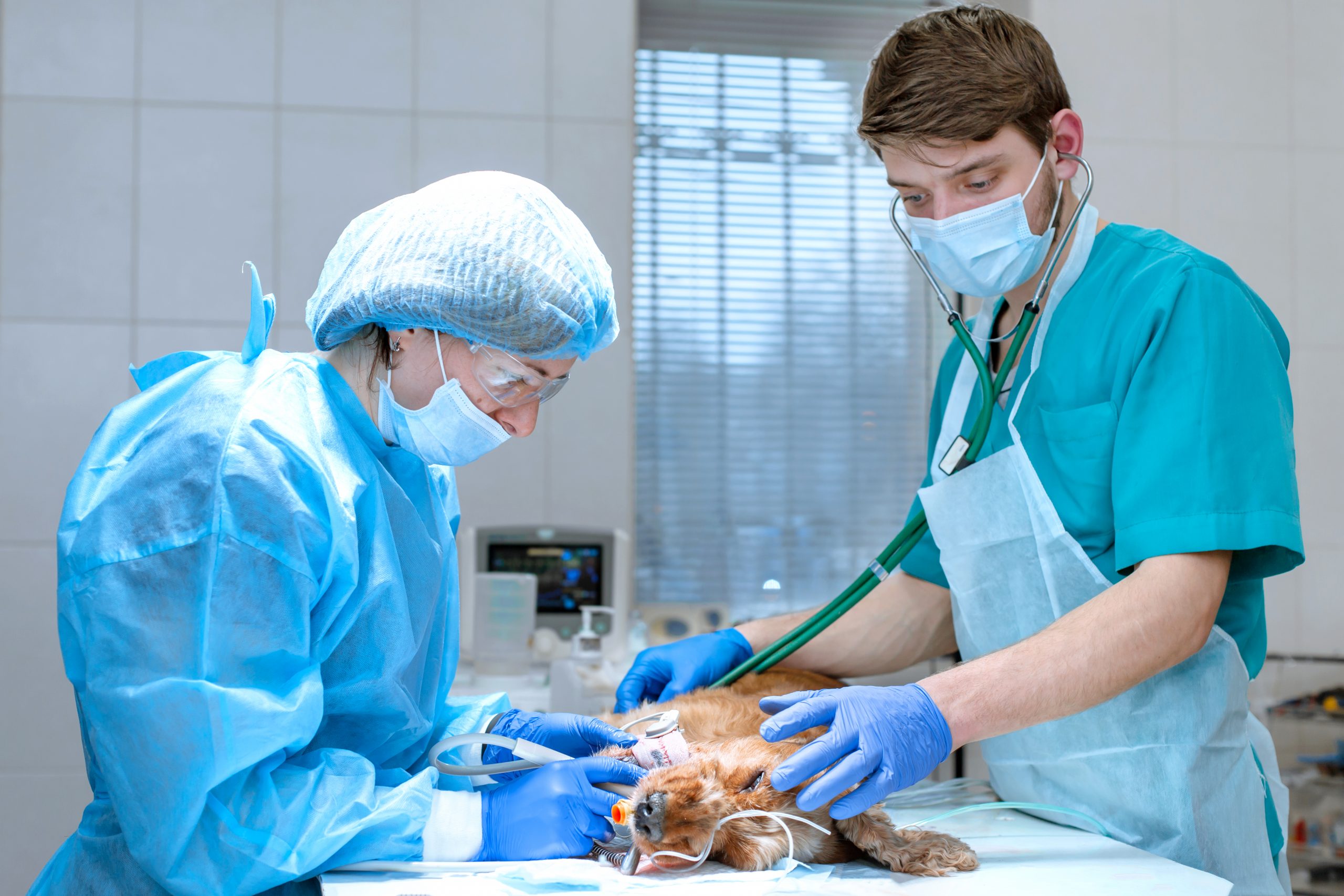
I do a mixture of consulting [e.g. vaccination clinics, check-ups] and surgery [for example neutering, or removing a tennis ball from a dog!]. No two days are the same.
How important is science in your life and in your role?
I would call myself a scientist now, because we use a lot of maths and everything that I have learnt has come from a basis of science. When I think about it, science is a really important part of my job, even though at times I forget that because I’m doing the clinical and practical side.
How did you get to this job?
I took a conventional approach into veterinary. I did science A-levels in Biology, Chemistry and Geography and then applied for vet school, which is typically a 5-year degree. I got rejected from all 4 universities that I applied to! I got a late call after my A-level results, saying someone had dropped out and asked if I wanted to start the following Monday!
Why should young people do science, or STEM, in school?
It really does open up so many possibilities. Just because you studied Biology/Chemistry/Physics at GCSE or A-level, it doesn’t mean that you have to do one specific thing.
What did you love/hate/find easy/find difficult in school?
I really struggled with science at school. I enjoyed it, but I found that the exams were quite technical. Chemistry was one which I needed to be vet, but I had to put in a lot of extra hours to really understand the science because I haven’t got a ‘mathematical brain’. Looking back I really enjoyed that experience because it got me to where I am today.
Do you have any role models?
I take a lot of inspiration from the people that I work with. When I was younger, my best friend was very driven and wanted to be a scientist – I think I found that very encouraging to study with her. We found a connection through science.
What inspired you to do this job?
At 9 I wanted to be a farmer, but realised that you need to have a farm! My uncle is a vet – I saw what he was up to and I thought it was really cool. The more time I spent with animals, the more I thought how incredible it would be to work with them every single day.
What one piece of advice would you give to a young person wanting to go into your job?
Do your science! Even if it might not come naturally, it will open a lot of doors. I also think get as much work experience as you can – seeing as many different things as you can, whether that’s a pet shop, a farm, working at a stable or a vets. It can feel quite scary…but actually, everyone has been really nice in my journey to being a vet.
I would call myself a scientist now, because we use a lot of maths and everything that I have learnt has come from a basis of science. "
What does a normal day look like for you?
I do a mixture of consulting [e.g. vaccination clinics, check-ups] and surgery [for example neutering, or removing a tennis ball from a dog!]. No two days are the same.
How important is science in your life and in your role?
I would call myself a scientist now, because we use a lot of maths and everything that I have learnt has come from a basis of science. When I think about it, science is a really important part of my job, even though at times I forget that because I’m doing the clinical and practical side.
How did you get to this job?
I took a conventional approach into veterinary. I did science A-levels in Biology, Chemistry and Geography and then applied for vet school, which is typically a 5-year degree. I got rejected from all 4 universities that I applied to! I got a late call after my A-level results, saying someone had dropped out and asked if I wanted to start the following Monday!
Why should young people do science, or STEM, in school?
It really does open up so many possibilities. Just because you studied Biology/Chemistry/Physics at GCSE or A-level, it doesn’t mean that you have to do one specific thing.
What did you love/hate/find easy/find difficult in school?
I really struggled with science at school. I enjoyed it, but I found that the exams were quite technical. Chemistry was one which I needed to be vet, but I had to put in a lot of extra hours to really understand the science because I haven’t got a ‘mathematical brain’. Looking back I really enjoyed that experience because it got me to where I am today.
Do you have any role models?
I take a lot of inspiration from the people that I work with. When I was younger, my best friend was very driven and wanted to be a scientist – I think I found that very encouraging to study with her. We found a connection through science.
What inspired you to do this job?
At 9 I wanted to be a farmer, but realised that you need to have a farm! My uncle is a vet – I saw what he was up to and I thought it was really cool. The more time I spent with animals, the more I thought how incredible it would be to work with them every single day.
What one piece of advice would you give to a young person wanting to go into your job?
Do your science! Even if it might not come naturally, it will open a lot of doors. I also think get as much work experience as you can – seeing as many different things as you can, whether that’s a pet shop, a farm, working at a stable or a vets. It can feel quite scary…but actually, everyone has been really nice in my journey to being a vet.
Career Path
You will need to do a veterinary degree at university to become a vet.
To get onto this course, you will need to either do:
A-levels
This is the most common path. You will usually need Biology and at least one or two other science or maths subjects.
An ‘Access to Higher Education course’ (a diploma)
Often through a college. This is a good option for those over 19 years old without science
A-levels or BTEC qualifications.
BTEC Diploma (Level 3 Extended)
For example in Applied Science or Animal Management.
There are 9 universities in the United Kingdom that offer a veterinary degree. They are in England or Scotland.
Career Path
You will need to do a veterinary degree at university to become a vet.
To get onto this course, you will need to either do:
A-levels
This is the most common path. You will usually need Biology and at least one or two other science or maths subjects.
An ‘Access to Higher Education course’ (a diploma)
Often through a college. This is a good option for those over 19 years old without science
A-levels or BTEC qualifications.
BTEC Diploma (Level 3 Extended)
For example in Applied Science or Animal Management.
There are 9 universities in the United Kingdom that offer a veterinary degree. They are in England or Scotland.